Driving School Reform
Driving School Reform 2027: What Will Change for Learner Drivers
Online learning instead of mandatory classroom theory, no fixed number of special training drives, and a shorter practical test: the 2027 driving school reform is intended to make the path to a driving licence more flexible and, where possible, more affordable.
- Author
- Redaktion fahrschuldaten.de
- Published
- Updated
- 11 min read
- 11 min read
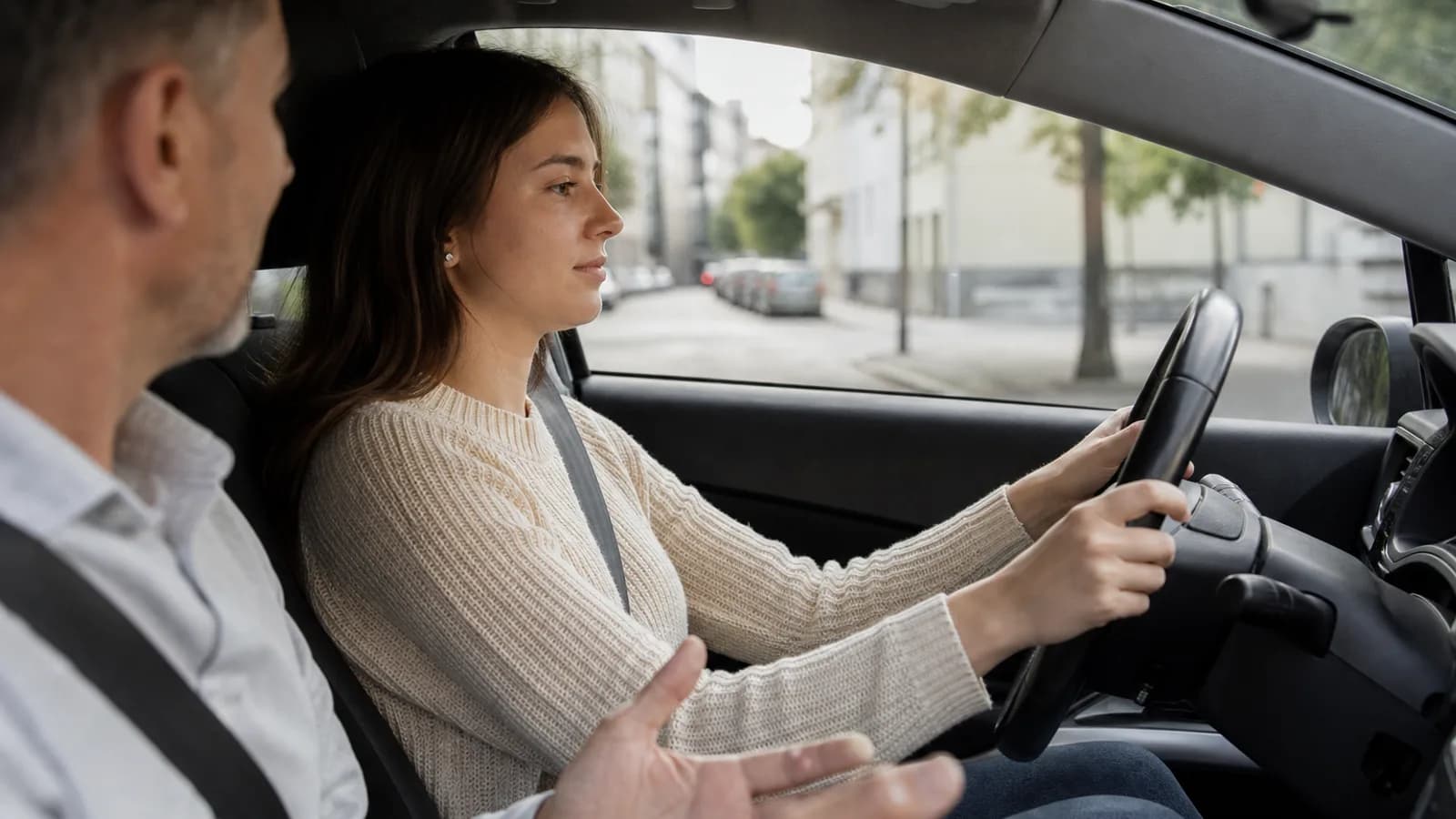
Online learning instead of mandatory classroom theory, no fixed number of special training drives, and a shorter practical test: the 2027 driving school reform is intended to make the path to a driving licence more flexible and, where possible, more affordable. For learner drivers, several parts of the process may change significantly.
One point is clear, however: the reform has not yet been finally adopted. The Federal Cabinet has launched the package; the draft act is in the parliamentary process. The Bundestag and the Bundesrat can still change individual rules and dates.
Status: 31 August 2026. This article describes the planned rules from the draft act and draft ordinance. They are not yet in force.
Key points at a glance
- Under the draft, new rules for theory, practical training, special training drives, simulations and test readiness are due to begin on 1 January 2027.
- Changes to the theoretical and practical tests are generally scheduled for 1 July 2027.
- Theory should in future be learnable in person, digitally in real time, flexibly over time via digital materials, or through a combination of these formats.
- The twelve prescribed special training drives for category B are due to cease as a fixed minimum number. Rural drives, drives on motorways or dual carriageways, and drives in darkness or dusk remain required.
- Simulations may supplement practical training but must not fully replace real driving practice.
- Before accompanying a learner to the practical test, a successful test-like assessment in traffic should be documented.
- For categories B and BE, a practical test of at least 40 minutes is planned. At least 25 minutes of that should be pure driving time.
- A public register is intended to make prices and practical pass rates easier to compare.
- The reform aims for a more affordable driving licence. A specific saving is not guaranteed.
When is the 2027 driving school reform due to start?
The current draft does not provide a single start date for all changes. A staggered introduction is planned:
| Planned date | Intended changes |
|---|---|
| 1 January 2027 | New forms of knowledge acquisition, more flexible practical training, new rules for special training drives, use of simulations and a new test of readiness for the practical exam |
| 1 July 2027 | Changes to the theoretical and practical tests, plus the legal basis for the transparency register |
| by 1 October 2027 | Transitional deadline by which existing driving schools should, under the current draft, submit their prices for the first time |
These dates come from the current drafts. They are only reliable once the legislative process is complete and the rules have been promulgated.
Theory lessons are to become fully digital
The previously prescribed path of classroom theory in driving school rooms is to become more flexible. Under the draft ordinance, the required knowledge may in future be acquired in different ways:
- in classroom teaching,
- digitally in real time (synchronously),
- flexibly over time via digital learning materials (asynchronously), or
- through a combination of these formats.
That does not mean every driving school must offer every option. Driving schools should be free to decide which learning formats belong to their offering. Anyone planning fully digital preparation should therefore check before enrolment whether the chosen school actually provides that option.
Knowledge requirements are not meant to fall. Even with digital learning, the theory test remains. What is meant to change is primarily how learners prepare.
The question catalogue is to shrink and the scoring system to become simpler
According to the Federal Ministry of Transport, the theory question catalogue currently comprises more than 1,100 questions and is to be reduced by around one third, with a stronger focus on clear, practical and safety-relevant content. These figures come from the ministry’s political communications; a concrete future catalogue size is not fixed in the draft documents available.
In addition, the draft ordinance provides for a simplified scoring system. Each question should generally count as one point. For a first acquisition of categories AM, A1, A2, A, B, L and T, 30 questions would still be set. A maximum of three errors would be allowed. Specially marked safety-relevant questions could lead to an immediate fail if answered incorrectly.
The number of exam questions per test remains unchanged under the draft. Confusing the catalogue size with the exam paper should be avoided.
The twelve special training drives are to go – not the driving areas
For the category B car licence, twelve special training drives are currently prescribed:
- five rural drives,
- four motorway drives, and
- three drives at dusk or in darkness.
This fixed minimum number is to cease. Instead, the necessary volume should depend on the individual training level. Instructors must still establish that the relevant situations are mastered safely.
Does that mean only three special training drives?
No. Rural roads, motorways or dual carriageways, and darkness or dusk are three mandatory driving areas, not automatically three individual lessons. The draft deliberately sets no fixed minimum number. Depending on learning progress, fewer than today’s twelve drives may suffice. Several drives in one or all areas may still be required.
The claim “From 2027 there will only be three special training drives” is therefore misleading.
Driving simulators are to supplement training
Simulations are to be usable more widely. Complex or rare traffic situations, for example, can be repeated without putting other road users at risk. Under the draft, an instructor need not necessarily be present during a simulation.
A complete licence course on a simulator alone is not envisaged, however. In particular, rural drives, drives on motorways or dual carriageways, and drives in darkness or dusk must still take place in real traffic. There is also no plan to require driving schools to offer a simulator.
Whether simulations make training cheaper in an individual case depends on the school’s offering and pricing.
A practice test is to come before the practical exam
An important change concerns establishing readiness for the practical test. Before the driving school accompanies a learner to the practical exam, at least one successful test modelled on a real exam should take place.
The test should:
- be conducted in public traffic,
- cover the exam-relevant content,
- match the intended exam duration and minimum driving time, and
- be documented by the driving school.
This is meant to make it clearer whether test readiness actually exists. At the same time, establishing test readiness may become a separate price item. When comparing prices later, learners should therefore look beyond the basic fee and the lesson price alone.
The practical test is to become shorter
For categories B and BE, the draft provides for a minimum duration of 40 minutes from 1 July 2027. At least 25 minutes of that should be pure driving time. The current minimum duration is 55 minutes in total; the 15-minute reduction follows from the draft ordinance.
The frequently used claim “The driving test will only last 25 minutes in future” is wrong. In addition to the 25 minutes of driving time, components such as preparation, safety checks, basic manoeuvres and announcing the result remain.
Shorter tests could allow more exam slots. Whether waiting times actually fall still depends on the number of available examiners and on regional demand.
Practising with relatives is to be trialled first
A time-limited, scientifically accompanied pilot is also planned. Category B learner drivers could then practise in public traffic under certain conditions with a suitable close person.
Requirements are expected to include, among others:
- a passed theory test,
- sufficient basic competence,
- an official authorisation,
- suitable insurance cover, and
- an approved accompanying person.
Private practice is meant to supplement professional driving school training, not replace it. Each federal state should also be free to decide whether to take part in the trial. It follows that even if the legal basis is adopted, this option will not automatically start everywhere in Germany.
Prices and practical pass rates are to become more transparent
Driving school costs consist of several individual items that until now have been labelled and presented differently. The draft act therefore provides for a publicly accessible transparency register. Price information and practical pass rates are to be made available via the state mobility data platform Mobilithek. Information and comparison services should also be allowed to use these data.
For prices, a more uniform presentation per licence category is envisaged. This includes, among other things, the basic fee, theory offering, driving lesson, simulation, establishing test readiness, and presentation for the tests.
Practical pass rates are not to be assessed by learner drivers or by driving schools themselves. The intended exam data are to be transmitted by the technical testing organisations and evaluated against defined criteria. Results are to be attributed to the driving school where test readiness was established.
The register is unlikely to be complete immediately. For already existing driving schools, the draft provides a deadline for the first price submission by 1 October 2027.
fahrschuldaten.de currently offers no public price comparison for consumers.
Will the reform make the driving licence cheaper?
A more affordable driving licence is the political goal of the reform. Whether any individual person actually pays less cannot be inferred from that.
Possible savings may arise from:
- fewer special training drives where learning progress allows,
- digital theory offerings,
- supplementary simulations,
- shorter practical tests, and
- more comparable price information.
Individual cost factors remain, however:
- the number of practice lessons needed,
- the price of a driving lesson,
- costs for establishing test readiness,
- retakes,
- regional price differences, and
- additional services from the driving school.
The basic fee alone therefore does not show which driving school is cheapest in the end. For a fair comparison, it must be clear which services are included and which are charged separately.
Start training now or wait for the reform?
There is no blanket recommendation. Anyone who needs a licence soon for training, work or everyday life should not postpone the start solely because of possible savings. The reform has not yet been finally adopted. The overall price will also continue to depend heavily on personal lesson needs and exam success.
Anyone with flexible timing who prefers to start only in 2027 could benefit from new learning formats and more flexible training rules. Whether the chosen driving school offers these options, and whether its offering becomes cheaper as a result, can only be judged from the actual terms.
For training that began before 1 January 2027, the draft ordinance provides a transitional rule. Such courses may be completed under the training rules applicable until the end of 2026. Anyone starting around the year change should ask the driving school which rules will apply to their own training.
Questions that help before enrolment
Regardless of the reform date, these points matter most before signing a contract:
- When can theory lessons and practical training actually begin?
- How long are current waiting times for lessons and exam appointments?
- Which services are included in the basic fee?
- Which items are charged separately?
- How is test readiness established and billed?
- Which digital learning formats or simulations are actually offered?
- Which rules apply if training runs across the 2026/2027 year change?
Frequently asked questions about the 2027 driving school reform
Does the entire reform take effect on 1 January 2027?
No. Under the current drafts, a staggered start is planned. Training rules should generally follow on 1 January 2027; changes to the tests and the transparency register predominantly on 1 July 2027. The process is not yet complete.
Are only three special training drives prescribed from 2027?
No. Three driving areas remain required: rural roads, motorways or dual carriageways, and darkness or dusk. How many drives are needed should depend on the individual training level.
Can theory be completed fully online?
Under the draft, yes. The individual driving school decides, however, which learning formats it offers.
Does the simulator replace real driving lessons?
No. Simulations are meant to be able to supplement training. Certain experience must still be gained in real traffic.
Will the practical test only last 25 minutes in future?
No. For B and BE, a minimum total duration of 40 minutes is planned. At least 25 minutes of that should be pure driving time.
May anyone practise privately with relatives?
No. What is envisaged first is an authorisation-based pilot with several requirements. The federal states should be free to decide on participation.
Conclusion: More flexibility, but no price guarantee
The 2027 driving school reform can change the path to a driving licence significantly. Learner drivers should be able to learn more flexibly, the rigid number of special training drives is to cease, and price information should become easier to compare. At the same time, real driving competence, established test readiness and individual training duration remain decisive.
Anyone who needs a licence should therefore look beyond the calendar or announced savings. More important are a suitable training concept, transparent prices, realistic waiting times and a driving school that explains the learning formats on offer clearly.
For driving schools, the organisational and technical implications of the reform are summarised in the specialist article Driving School Reform 2027: What Driving Schools Should Prepare Now.
Editorial note: Legal statements were checked against official publications and printed papers. Content and dates may change until the legislative process is complete.
Sources
- Federal Government: Reform for an affordable and modern driving licence
- Federal Ministry of Transport: Affordable driving licence – Cabinet lays the foundation
- German Bundestag: Draft Act, Printed Paper 21/7404Government draft; not yet finally adopted
- Bundesrat: Ordinance on Modernising Driving School Training, Printed Paper 365/26Draft ordinance; not yet finally adopted
- German Bundestag: Current overview of the draft act
Related articles

Driving School Reform
Driving School Reform 2027: What Driving Schools Should Prepare Now
The 2027 driving school reform changes more than lessons and tests. Driving schools face new decisions on theory formats, simulation, test readiness and uniform price reporting.
14 min read